
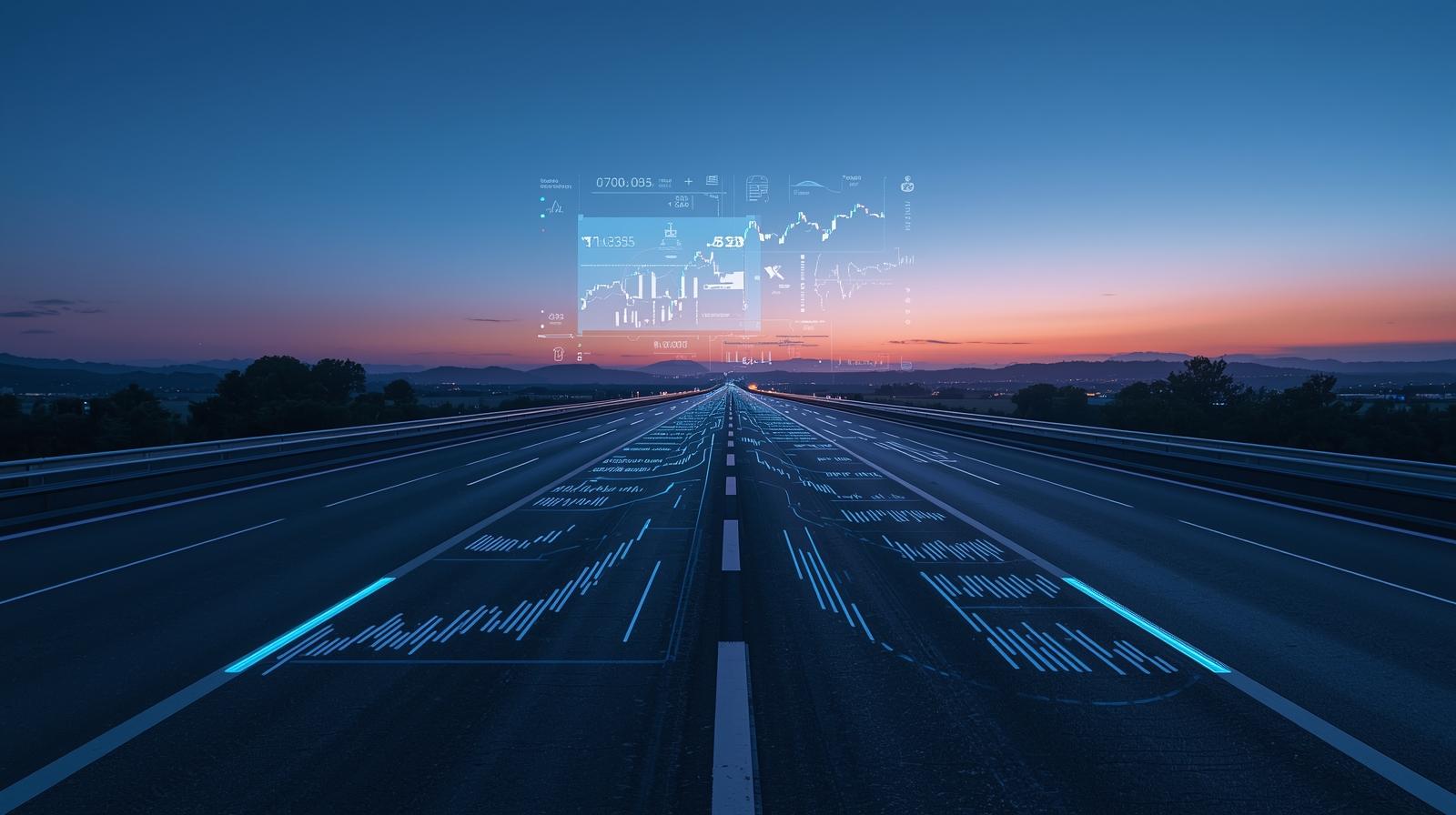
Compounding trading rarely feels exciting at the start. It feels more like a long road trip — one where the destination looks impossibly far away, progress feels slow, and patience is tested kilometer by kilometer. Many people travel hundreds or even thousands of kilometers during the holiday season, expecting smooth roads and quick arrivals, only to encounter traffic, delays, and long stretches of waiting. Trading works the same way. Those who succeed aren’t the ones chasing shortcuts, but the ones who understand that patience is a skill — a theme we explore deeper in our article on the difference between making money and building wealth through patience in trading.
And just like every long journey begins with the first stretch of open road, understanding compounding trading starts by recognizing why it feels so slow — and why that slowness matters.
Watching the Distance and the Balance
At the start of the drive, checking the GPS feels motivating. Later, it becomes irritating. Every glance shows that the car is barely moving.
In trading, the same happens. Accounts don’t grow overnight. Compounding can feel painfully slow. Traders stare at their balances, questioning whether patience will pay off, wondering if the strategy is working, and doubting whether they’ll ever reach their goals.
The key lesson? Focus on process, milestones, and disciplined progress, rather than obsessing over the end result.
Traffic, Trucks, and Candlestick Patterns
Along the highway, cars speed up, slow down, bunch together, then spread apart. One can’t predict every individual car, but over time, patterns emerge.
This is like watching candlestick charts. A single candle, like a single car, tells very little. Patterns only make sense in context. Experienced traders learn to read flow, structure, and behavior rather than reacting to every minor movement.
Then a truck appears — big, slow, unavoidable. The journey halts. Frustration rises.
Markets have their own trucks: elections, interest rate decisions, unexpected economic shocks, or global crises like COVID-19. These obstacles slow progress and test patience. Impulsiveness during these moments often leads to mistakes.
Tolls, Fees, and Market Costs
Even when the road is smooth, there are tolls and fees. Every stop adds a small cost. They’re inconvenient, but unavoidable.
Markets work the same way. Trading isn’t free. Fees, slippage, and spreads act like tolls — small reductions in returns that traders must account for. Ignoring them is like assuming a highway drive will be completely free: it only leads to frustration later.
Compounding accounts for these costs over time. Those who anticipate and respect them reach the destination more reliably.
The Rush Near the Finish Line
As the destination nears, temptation grows. The road seems shorter, the driver imagines faster routes. Traders experience the same urge. When an account is close to a target, the temptation to take bigger risks, increase leverage, or chase aggressive setups is strongest.
It feels logical — if I push harder, I can reach the goal faster. But this is precisely when patience matters most. The last stretch is where reckless moves can undo months of careful compounding. Slow, disciplined progress beats forced acceleration every time.
The FOMO Effect: Watching Others Speed Ahead
The driver sees other cars weaving past, seemingly effortlessly gaining distance. Why am I stuck? Shouldn’t I push harder too?
Traders feel the same urge when they see others taking risks and being rewarded — the fear of missing out (FOMO). Social feeds, forums, and market chatter amplify it.
But chasing someone else’s speed is dangerous. One impulsive overtake or forced trade can erase all the careful progress made along the way.
Safe Risk-Taking: Know Your Exits
Even when deciding to take a risk, experienced drivers plan safety. They leave room to return, maintain control, and anticipate obstacles.
In trading, this is the role of a stop loss. Calculated risks are fine, but overextending or ignoring exit plans can be catastrophic. Not every risk pays off, and that’s normal — what matters is that risks are controlled, measured, and survivable.
Quiet Roads and Quiet Markets
Some stretches of road are quiet. No trucks, no traffic, just long stretches of asphalt. It can feel monotonous, even hopeless.
Markets have similar periods — sideways movement, low volatility, and unclear setups. Traders staring at charts during these stretches are most prone to mistakes.
The wise approach is to use quiet time wisely: backtest strategies, review past trades, and refine rules. Doing nothing in these moments is not wasted — it’s preparation.
Milestones Over Obsession
Experienced drivers focus on milestones, not just the final destination: the next fuel stop, the halfway mark, the small towns along the way.
Traders benefit from the same perspective: consistency, small wins, and capital preservation. These milestones remind us that progress is happening — even when it feels slow.
AlgoColony: The Calm Co-Pilot
On long drives, a calm co-pilot makes all the difference. They manage the GPS, warn of obstacles ahead, and keep the driver from making emotional decisions.
AlgoColony plays this role in trading.
It doesn’t drive for the trader but handles the navigation:
- Executes rules with discipline
- Keeps strategy consistent
- Monitors market conditions
- Protects against emotional, risky impulses
With AlgoColony as co-pilot, traders can focus on their journey instead of reacting to every distraction or temptation.
Arriving Without Realizing It
Eventually, the destination appears. Frustration fades. Panic subsides. Even the quiet, slow stretches feel like part of the journey.
Compounding trading works the same way. Patience, discipline, and consistent adherence to strategy — while respecting market costs, avoiding FOMO, and taking safe, measured risks — eventually deliver results.
Not fast. Not flashy. But reliable. And one day, the journey ends — not because of shortcuts, but because the process was followed consistently.
What is compounding trading and how does it work?
Compounding trading works by reinvesting profits so gains generate additional returns over time. While growth may seem slow at first, consistent execution and patience allow results to build steadily and sustainably.
Why does trading feel slow or frustrating sometimes?
Trading often feels slow during sideways or low-volatility markets. These quiet periods can test patience, but they are a normal part of long-term investing and an ideal time to refine strategies instead of forcing trades.
How do major events like elections or pandemics affect trading?
Events such as elections, interest rate decisions, or global crises can disrupt markets and increase uncertainty. These moments often slow progress but are temporary and should be approached with caution rather than emotional decision-making.
What is FOMO in trading and how can I avoid it?
FOMO (Fear of Missing Out) occurs when traders chase rapid gains after seeing others profit. Avoiding FOMO requires sticking to a proven strategy, focusing on risk management, and resisting impulsive trades driven by emotions.
Why is risk management and stop loss important in trading?
Risk management protects traders from large losses. Using stop losses allows traders to take calculated risks while ensuring they can exit safely if a trade moves against them, preventing total loss or liquidation.
How can AlgoColony help with disciplined and consistent trading?
AlgoColony helps traders execute rule-based strategies consistently, reduce emotional decisions, and maintain discipline. By acting as a trading co-pilot, it supports long-term compounding and controlled risk-taking.