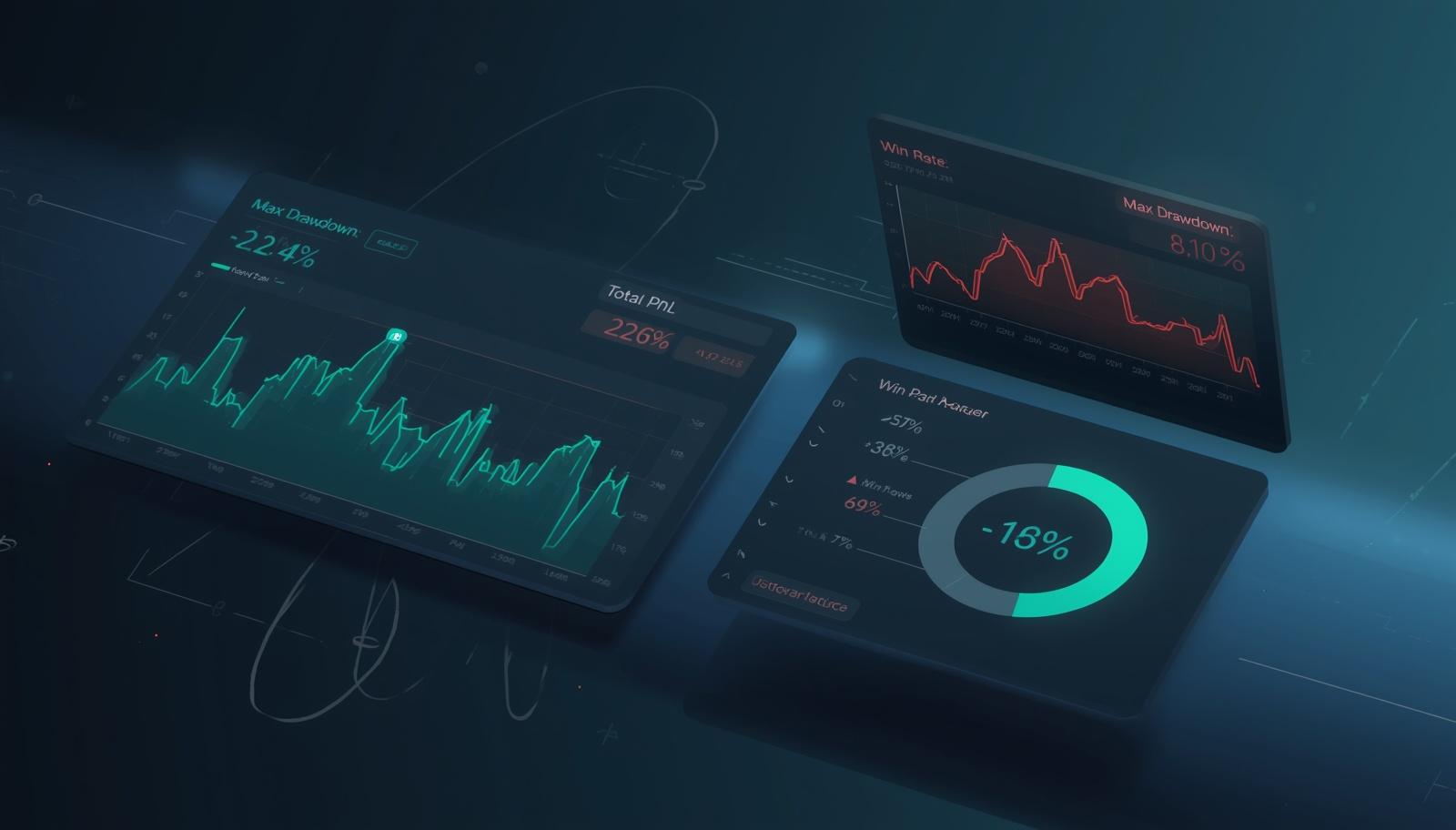
Drawdown in trading is one of the most important metrics —but also one of the most misunderstood.
Drawdown in trading is the percentage decline in your account equity from its highest point to its lowest point before recovering, showing the maximum temporary loss during a trading period.
In simple terms:
Your account grows → reaches a high
Then drops → that drop is drawdown
When it recovers → drawdown resets
Key Idea
Drawdown is not your total loss.
👉 It’s the temporary drop from the highest point your account reached.
Why This Matters
You could:
Be profitable overall
But still experience drawdown along the way
That’s completely normal.
👉 If misusing the drawdown is a known mistake, here are a few more mistakes traders make with compounding:
👉 The strategy behavior does not change 👉 Only the size of the movements changes
Important Detail
Absolute drawdown (in dollars) stays proportional
But percentages change depending on:
Account size
Trade size
So:
Same strategy + same data = different % results depending on scaling
Why This Confuses So Many Traders
You might compare two bots (for example in AlgoColony) and see:
Bot A: Higher drawdown
Bot B: Lower drawdown
And assume: 👉 “Bot A is worse”
But in reality:
👉 Bot A might just be trading different positions sizes
When Drawdown Looks Bad (But Isn’t)
A higher drawdown might simply mean:
More aggressive position sizing
Faster growth potential
Example:
30% return with 16% drawdown
This can still be very efficient.
When Drawdown Looks Good (But Isn’t)
A low drawdown might mean:
Very small position sizes
Slow growth
Example:
4.6% return with 3.33% drawdown
👉 Safer—but possibly too slow depending on your goals
Return vs Drawdown (A Better Way to Compare)
Instead of looking at drawdown alone, use:
Strategy
Return
MDD
Ratio
Aggressive
30%
16%
1.88
Conservative
4.6%
3.33%
1.38
How to Read This
Higher ratio → better efficiency
Lower ratio → safer but slower
Important Insights
Drawdown is based on equity, not raw PnL
Position size directly affects drawdown %
Initial capital affects how risk is perceived
Same strategy can show very different results depending on scaling
How Professionals Handle Drawdown
Professionals don’t just look at one number.
They:
Calculate drawdown using full equity
Track maximum drawdown (MDD)
Compare return vs drawdown
Visualize equity curves and drawdown curves
Adjust position size instead of constantly changing strategy
Key Takeaways
Drawdown shows the largest drop from a peak, not total loss
Equity-based calculations give the most accurate view
Position size and capital heavily influence percentages
Same strategy ≠ same drawdown
Return-to-drawdown ratio helps evaluate performance
Final Thought
Understanding drawdown changes how you see trading completely.
Instead of asking:
👉 “Is this drawdown good or bad?”
Ask:
What position size is being used?
How does it compare to the return?
Is the strategy consistent?
Because:
Drawdown doesn’t tell you if a strategy is good—it tells you how it behaves.
What is Drawdown in trading?
Drawdown in trading is how much your account drops from its highest value to its lowest point before it recovers, measured as a percentage. Investopedia.com also has a nice explanation.
Why does drawdown matter?
It shows the risk and volatility of a strategy, helping you understand how much your account can drop during losing periods.
What are key terms Drawdown?
Initial capital: Starting balance of your account Position size: How much you risk per trade PnL (Profit and Loss): Gains or losses from trades Equity: Total account value including PnL
Why do two bots have different drawdowns?
Because of differences in position size, capital, or scaling—not necessarily strategy.
Can the same strategy have different drawdowns?
Yes. Changing position size or capital changes the percentage drawdown even if the trades are identical.
How to reduce drawdown in trading?
Not always by changing the strategy. Often by: Managing position size Adjusting capital allocation Evaluating risk vs return